What We Do
Gardens
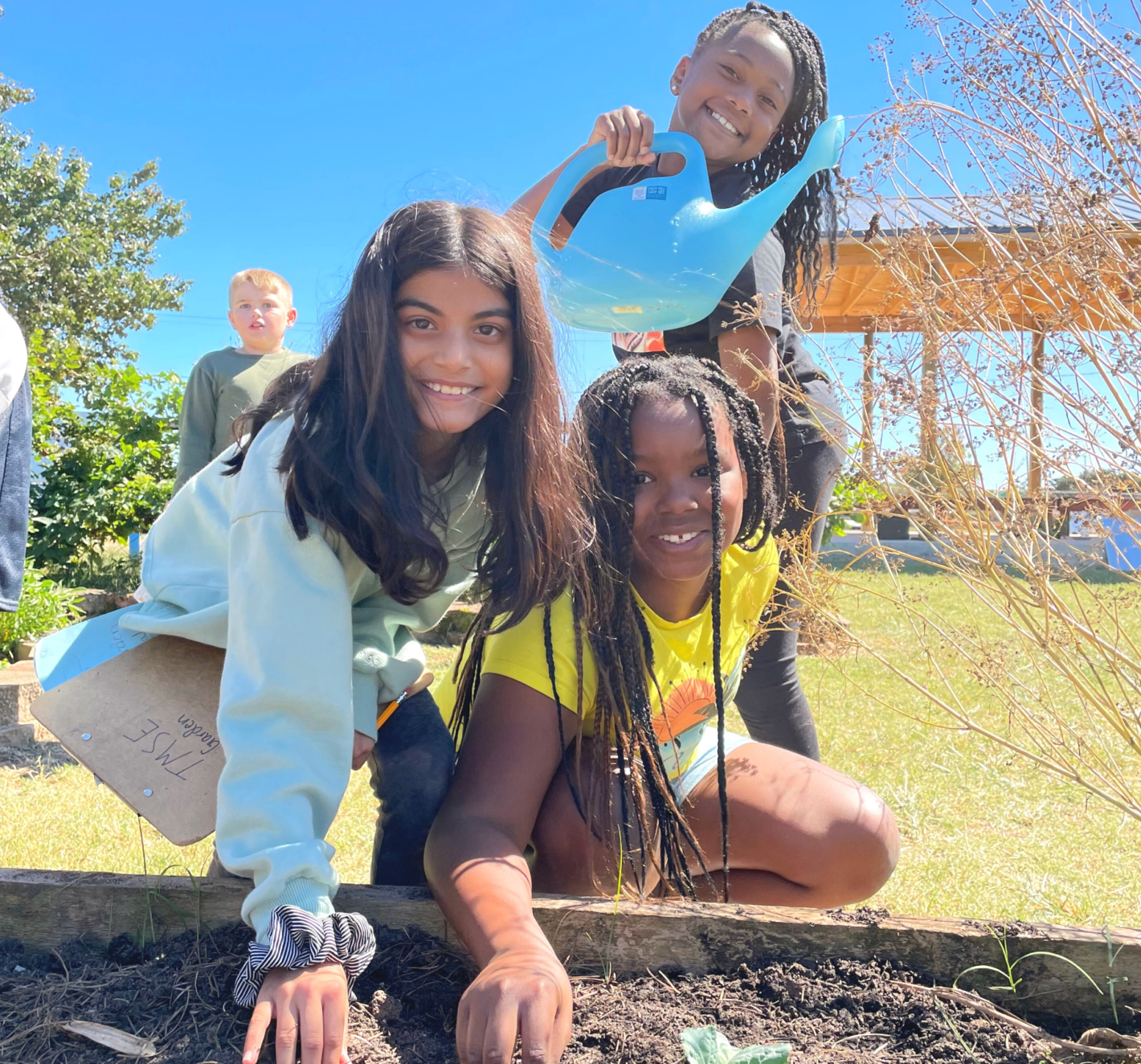
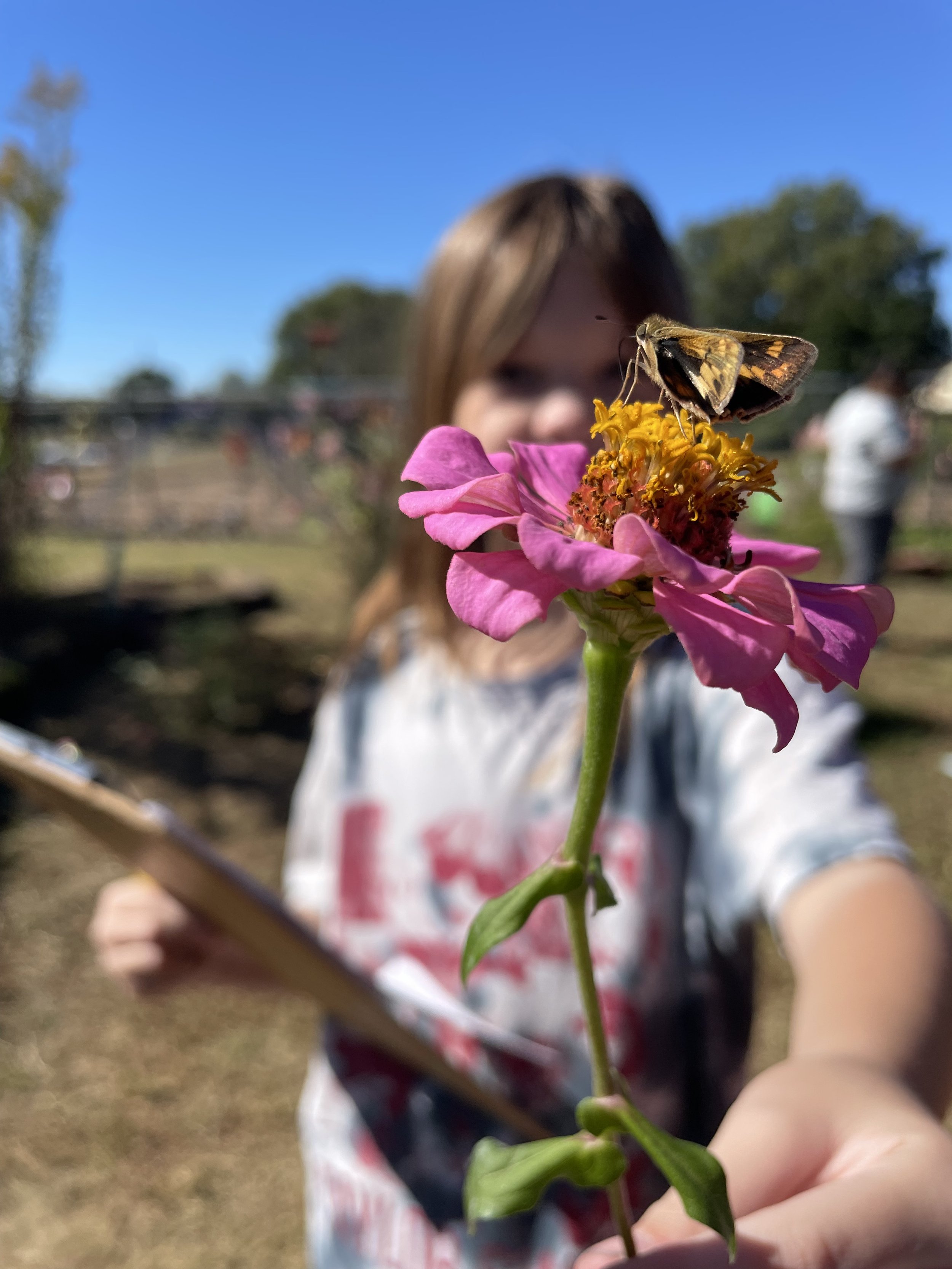
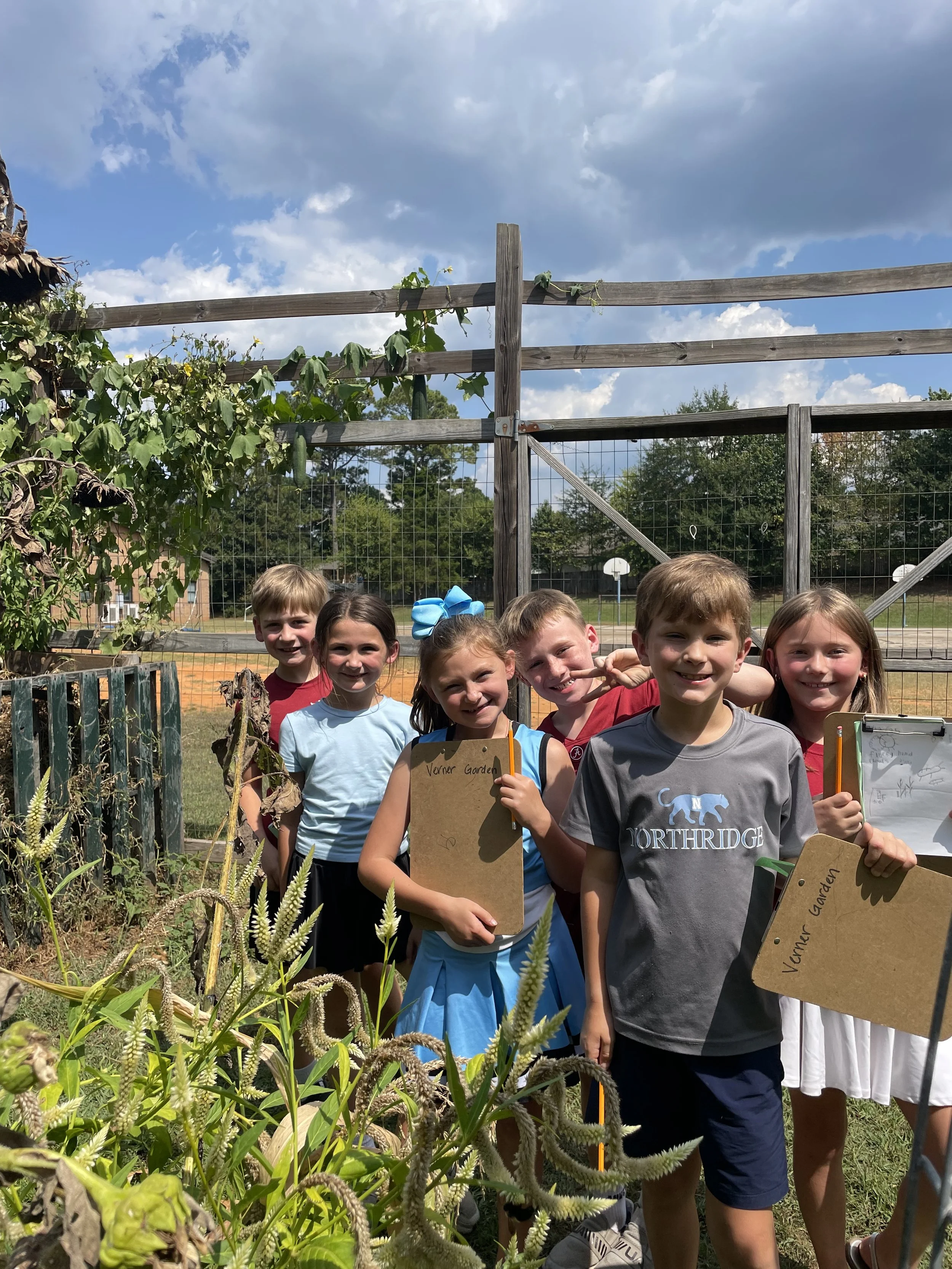
Each of our 12 teaching gardens is a fresh-air learning lab right on the school grounds. Raised beds overflow with vegetables, fruits, herbs, flowers, and pollinator-friendly plants, alongside compost bins, picnic tables, and harvest and washing stations. Students find bees on the zinnias, worms in the compost, and plants at every stage of their life cycle. Schools also use the gardens as a calm, beautiful place to breathe, reset, and refocus during the day. Our Garden Educators care for every garden year-round, so teachers never have to.
Curriculum
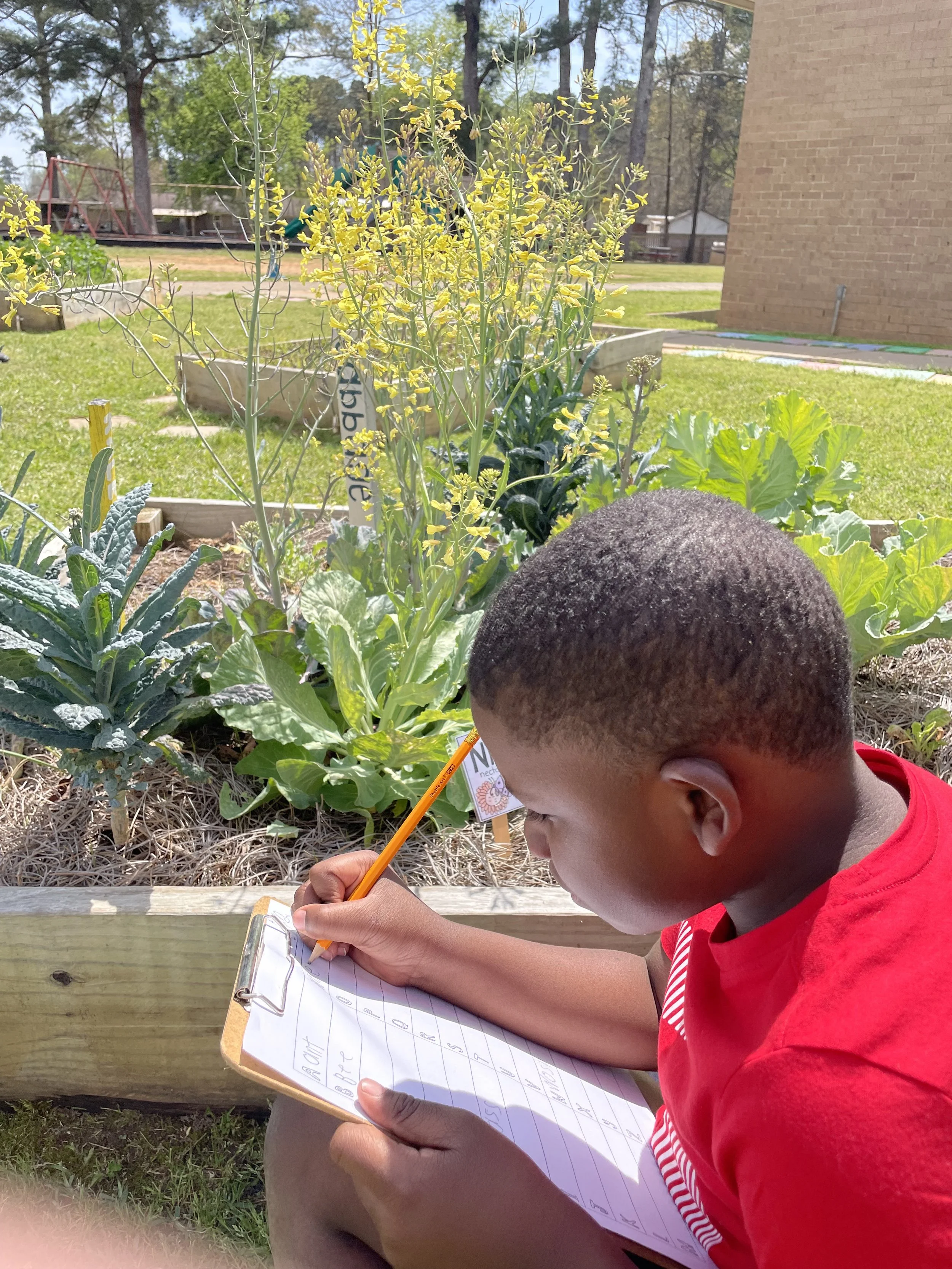
Our K–5 garden curriculum is built on the Alabama Course of Study and works hand in hand with what teachers already cover in class. Science, math, reading, writing, social studies, health, and the arts all grow in the same bed. Students might measure plant growth, write about a seed's journey, or map where their food comes from. Teachers tell us students connect classroom learning to the real world more easily after time in the garden. Our curriculum has also been purchased by more than 50 school districts, teachers, and organizations across North America.
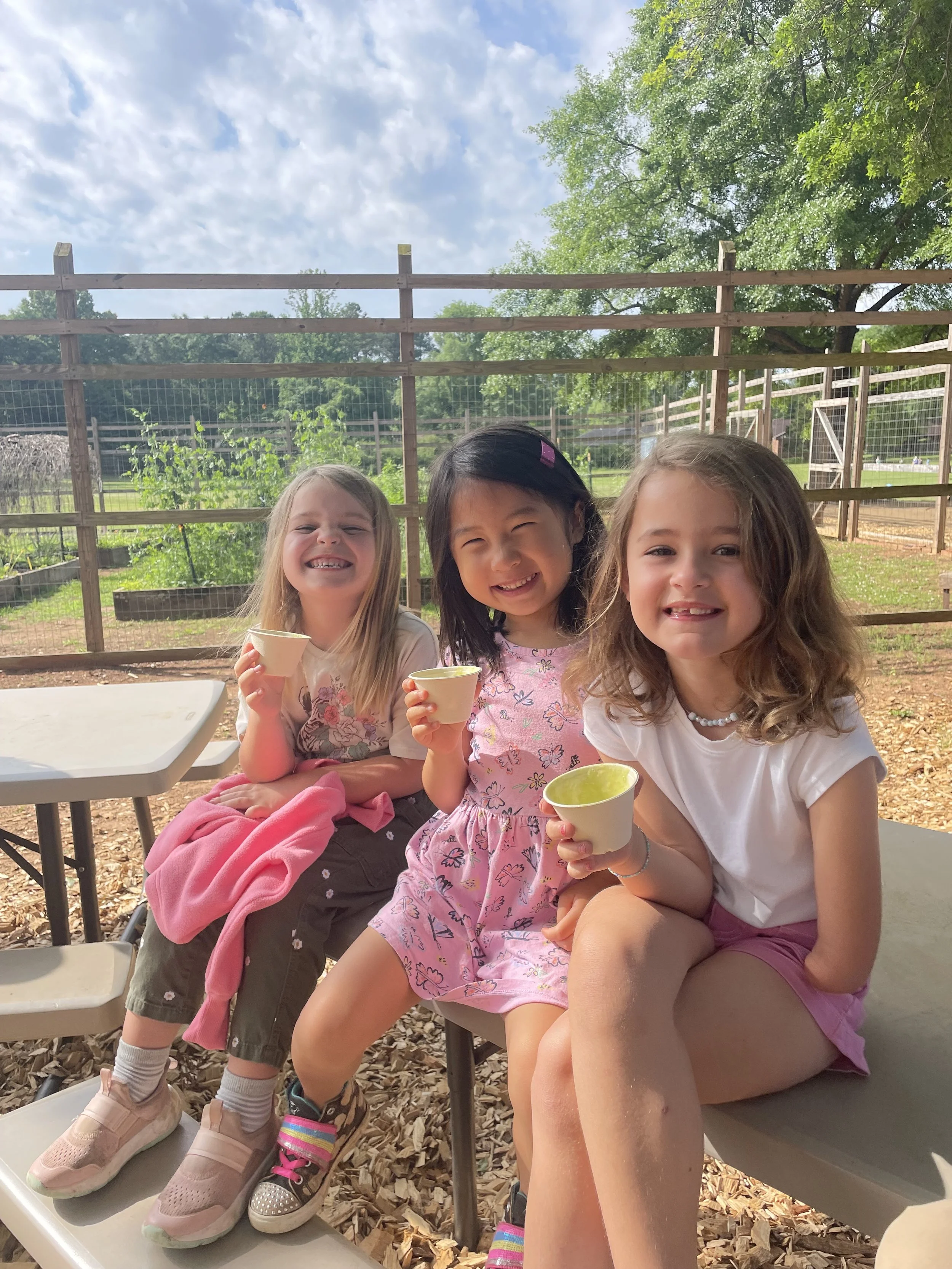
When kids plant, tend, and harvest their own food, they want to taste it. Our cooking and tasting days are a highlight of the year, and students often discover they love a vegetable they swore they would never try. Students also run their own farm stands and bring recipes and new favorites home to their families. In our teacher surveys, 90% of teachers say students became more willing to try new fruits and vegetables.
Health & Nutrition
The garden is a place for curiosity, joy, empathy, and care. Students learn to share tools, take turns, and look after something living. Teachers tell us students gain responsibility, self-control, and independence in the garden, and that they learn to work as a team. Students who struggle in a typical classroom often shine outside.
Social Emotional Learning & Life Skills
Belonging
We believe every student deserves access to joy, love, knowledge, and safety. Our gardens are built to welcome every learner. We grow plants that feel like home to students from all walks of life and we invite students to share the tastes and stories they bring with them. We know that diversity makes a garden resilient. We believe that the same is true for our community.